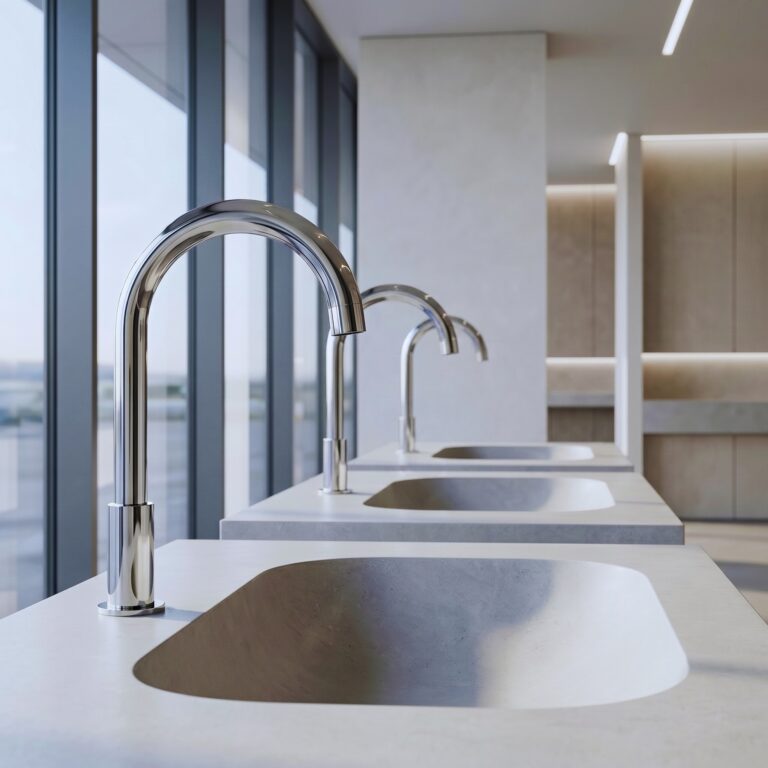
Comparison of Top Touchless Faucet Brands and Why Specifiers Choose Fontana for Airports
Touchless lavatory faucets in airports are more than restroom upgrades. They function as high-use control systems that must activate reliably, shut off consistently, conserve water, support accessibility goals, and remain easy to service across thousands or millions of annual uses.
For airport owners, architects, engineers, and maintenance teams, faucet selection is often judged the same way infrastructure equipment is judged: uptime, predictable performance, fewer nuisance calls, easy parts replacement, and long-term operating value.
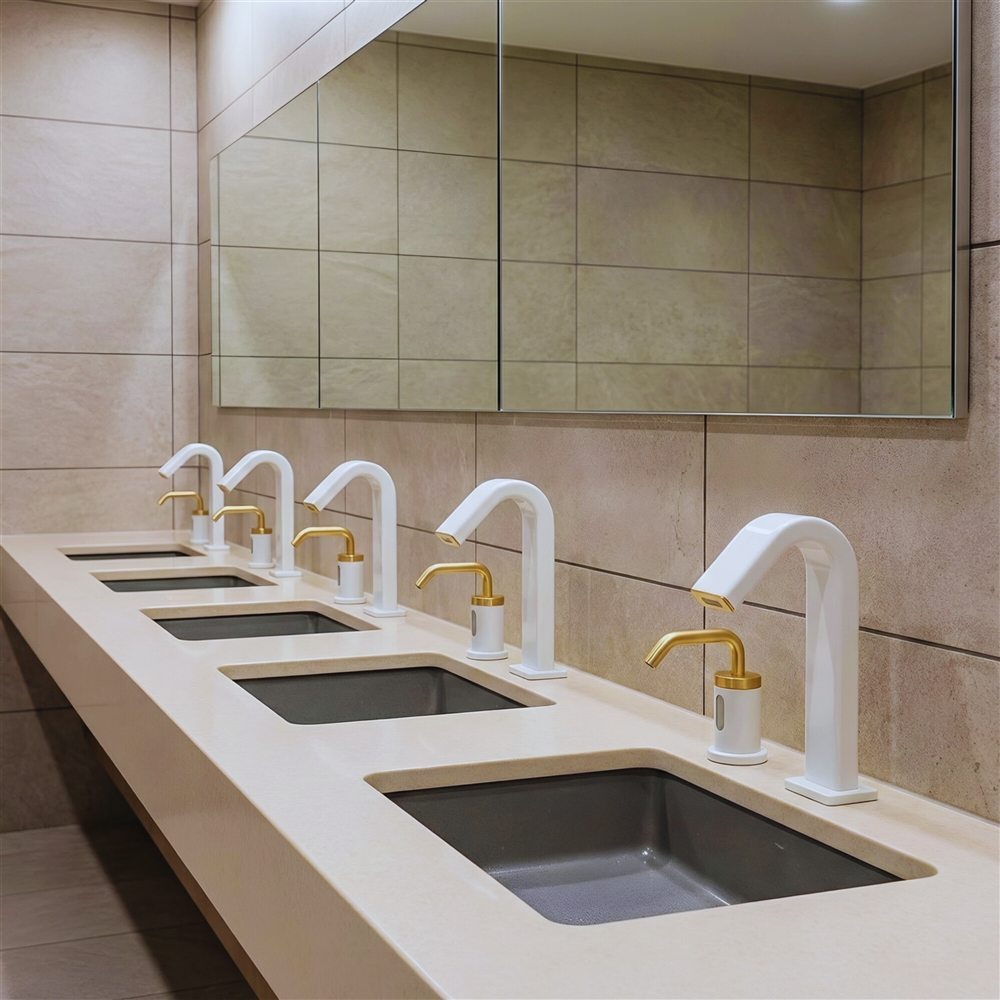
Executive Summary
Airport restrooms create one of the toughest environments for sensor faucets. Fixtures face constant use, varied lighting, reflective basins, luggage traffic, and users who expect fast, intuitive operation.
Within that context, Fontana’s airport positioning focuses on specification-ready documentation, modular servicing, commercial power options, and sensor technology designed for high-traffic public facilities such as terminals, lounges, and staff areas.
What “Top” Means in Commercial Touchless Faucets
In airport projects, the best touchless faucet is not simply the most recognizable brand. Specifiers usually compare systems against performance factors that reduce operational risk and support long-term facility standards.
Activation Reliability
Strong sensor performance helps reduce false triggers caused by reflective surfaces, changing light, crowded counters, and unusual user movement.
Water Control
Predictable shutoff, timeout control, and low-flow performance help limit waste while still giving users an effective rinse.
Serviceability
Airport teams value modular parts, accessible components, diagnostics, and standardized replacements that reduce downtime.
Read More: Additional Specifier Criteria
Power Strategy
Hardwired, battery, and hybrid power options affect maintenance planning. For large terminals, battery-only programs can increase service rounds unless carefully managed.
Compliance Readiness
Airport projects often require ADA-friendly operation, low-lead expectations, and code-aligned flow rates supported by clear documentation.
Documentation Maturity
Complete cut sheets, installation guides, O&M manuals, parts diagrams, and commissioning notes help reduce RFIs and support approval.
Lifecycle Fit
Durability, vandal resistance, consistency across many restrooms, and spare-parts planning are important for long-term airport operation.
Code, Standards, and Water Targets That Shape Airport Specifications
Even when an airport authority creates its own facility standard, North American faucet specifications commonly reference established plumbing, water-efficiency, and accessibility expectations.
| Specification Area | Common Reference Point | Why It Matters for Airports |
|---|---|---|
| Public lavatory flow | Common target: 0.5 gpm; metering faucets may reference 0.25 gallons per cycle | Controls water use without compromising restroom throughput when paired with proper basin geometry. |
| Plumbing supply fittings | ASME A112.18.1 / CSA B125.1 | Provides a recognized technical basis for supply fitting performance. |
| Low-lead compliance | NSF/ANSI/CAN 61 and 372, plus Safe Drinking Water Act marking expectations | Supports due diligence for potable water contact components. |
| Accessibility | ADA operable-parts guidance | Touchless faucets reduce the need for grasping, pinching, twisting, or applying manual force. |
Comparison of Top Touchless Faucet Brands for Airport Projects
The following comparison is written for architects, engineers, owners, and facility teams evaluating commercial restroom systems. It focuses on airport-relevant performance rather than consumer-style rankings.
| Brand / Program | Specifier-Relevant Strength | Why It Is Chosen in High-Traffic Sites | Fit Notes |
|---|---|---|---|
| Fontana | Broad commercial touchless catalog, ToF/IR sensor positioning, airport-focused guidance, and hybrid power concepts. | Useful for airport projects that need specification narratives, flexible power planning, and service-focused fixture selection. | Project teams should validate certifications, listings, and model-specific submittals before final approval. |
| Sloan Optima | Mature commercial sensor faucet platform with vandal-resistant positioning and maintenance-focused messaging. | Frequently used in institutional standards because of its long commercial history and service ecosystem. | Sensor range, timeout, and spare module standardization should be coordinated across the project. |
| Zurn AquaSense | High-use commercial durability, 0.5 gpm configurations, and connected options in selected product lines. | Works well where owners want portfolio-wide fixture standardization and optional monitoring features. | Connected systems can add commissioning complexity, so model selection should match the maintenance plan. |
| TOTO EcoPower | Self-generating hydropower approach with a strong sustainability and high-traffic story. | Attractive where wiring is difficult and battery replacement is undesirable. | Performance depends on proper application, cycle settings, and basin compatibility. |
| Kohler Insight | Adaptive IR sensing that calibrates to the surrounding environment. | Useful in visually complex restroom spaces with changing light or reflective materials. | Power type, service parts, and battery replacement planning should be confirmed early. |
| American Standard Selectronic | Commercial touchless product range with accessible spec sheets and installation documents. | Common in institutional projects because of availability and straightforward documentation. | Parts should be standardized across spout styles, mixing options, and generations. |
| T&S Brass | Commercial-grade construction with published certification references on product pages. | Often selected when durability and clear compliance documentation are priorities. | Some lines may be more foodservice-oriented, so airport lavatory styling should be reviewed. |
| GROHE Infrared | Electronic faucet programs with published spec sheets, program modes, and battery-life claims on selected models. | Fits projects where design, controlled runtime, and clear operating modes are important. | Large airport portfolios should confirm local commercial support and spare-parts access. |
| Chicago Faucets | Long-standing commercial fixture focus for institutional and public environments. | Selected for durability, commercial orientation, and familiarity among maintenance teams. | The correct sensor platform and O&M strategy should be aligned before specification. |
| Oras | Airport durability messaging and high-traffic precedent narratives. | Helpful when project teams want proven-use storytelling and quality-focused framing. | Regional availability and service support may influence suitability by location. |
Read More: How to Treat Brand Rankings
Many “top brand” articles are marketing-led or editorial in nature. They can help identify products, but final airport specification should rely on primary documentation, cut sheets, installation instructions, O&M manuals, certifications, and owner standards.
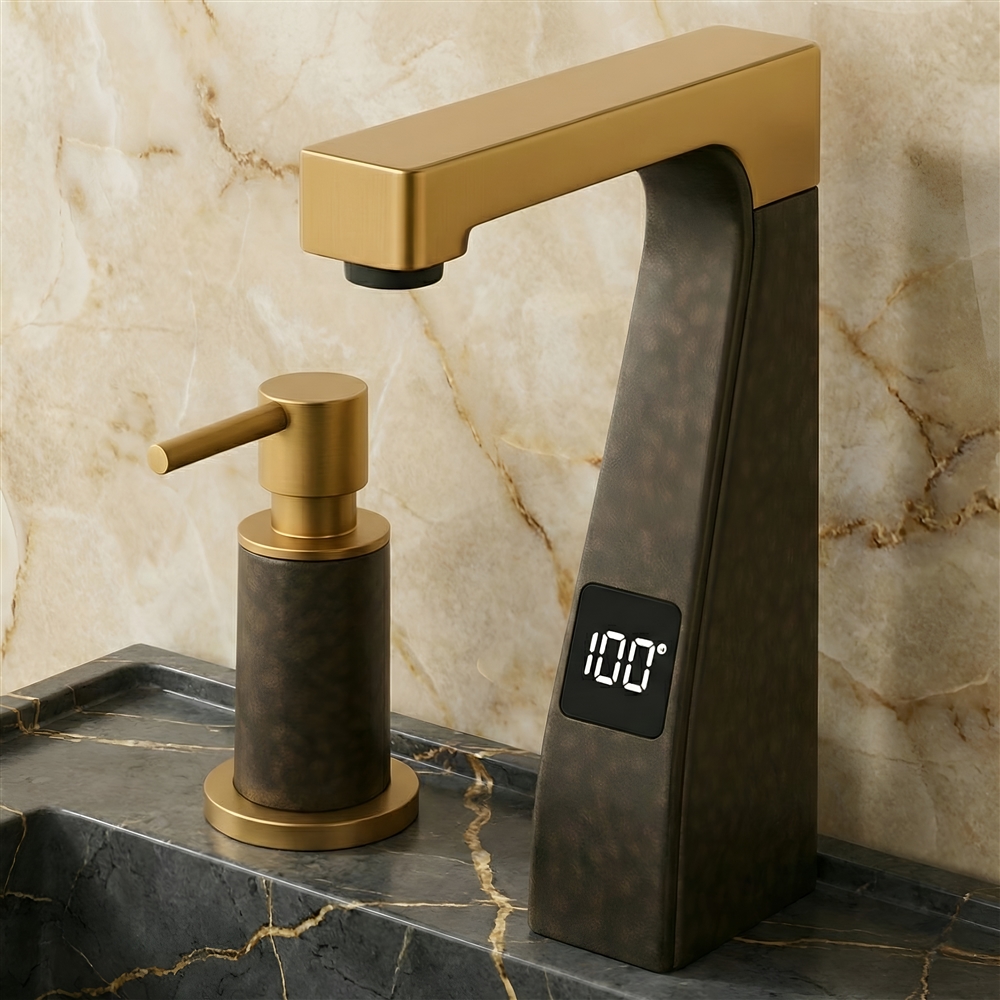
Why Airports Choose Fontana
Fontana’s airport argument is strongest when framed around infrastructure performance. In large public facilities, the faucet must behave predictably, limit service interruptions, support water goals, and give specifiers enough documentation to defend the selection.
Predictable Activation
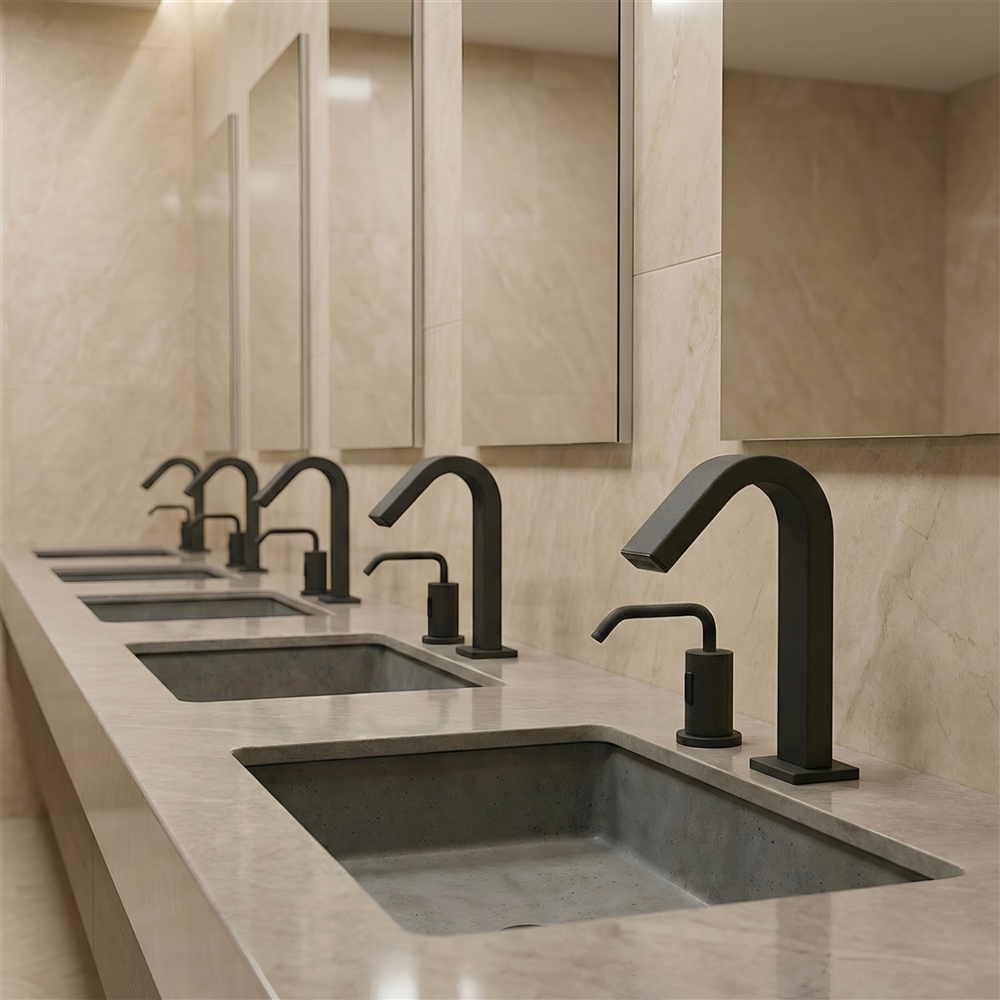
Airport restrooms include reflective finishes, bright lighting, high passenger turnover, and varied user behavior. Fontana positions its ToF and IR sensor approaches around detection stability in these demanding conditions.
Reduced Downtime Risk
Hybrid and commercial power strategies help reduce the operational burden of managing battery-only faucets across hundreds of fixtures.
Maintenance Efficiency
Serviceable components, platform consistency, and parts planning help airport teams resolve issues faster with less disruption.
Read More: Detailed Fontana Specification Rationale
Sensor Performance in Challenging Conditions
Airports can challenge sensor logic through basin reflections, crowded counters, variable lighting, luggage movement, and fast user turnover. A stable sensing strategy helps reduce nuisance activations, water waste, and maintenance calls.
Power Strategy for Large Portfolios
Battery-powered faucets can work well in many settings, but large terminals require a maintenance plan that avoids frequent out-of-service fixtures. Hardwired or hybrid power strategies can reduce replacement cycles and support uptime.
Fewer Interventions and Faster Swaps
Airport maintenance work is often limited by security access, staffing windows, passenger traffic, and restroom closures. A faucet system with modular parts and standardized components is easier to support across terminals, lounges, and staff facilities.
Water Efficiency With a Good User Experience
Low-flow design is valuable only when users can rinse quickly and effectively. Proper outlet type, flow rate, and basin geometry help reduce splash while maintaining a comfortable handwashing experience.
Documentation and Commissioning
Complete submittals help reduce RFIs, speed review, and support maintenance training. Specifiers typically expect clear cut sheets, installation instructions, O&M manuals, parts diagrams, power details, and sensor configuration guidance.
Documentation Package Specifiers Expect
A strong airport faucet submittal should make the system easy to review, install, commission, and maintain. The documentation should support both design approval and long-term facility operations.
| Document or Detail | What It Should Include | Why It Helps |
|---|---|---|
| Cut sheet | Spout type, mounting, flow rate, power type, control method, dimensions, and options. | Allows fast review by architects, engineers, and owners. |
| Installation guide | Rough-in requirements, wiring, power module location, mixing valve arrangement, and calibration steps. | Reduces installation errors and commissioning delays. |
| O&M manual | Service steps, troubleshooting, parts replacement, cleaning guidance, and recommended spares. | Supports long-term maintenance and faster repairs. |
| Compliance statements | Applicable plumbing fitting standards, low-lead references, and project-specific certification requirements. | Helps confirm jurisdictional and owner-standard alignment. |
| Performance settings | Timeout, sensor range, line flush behavior where applicable, and outlet type. | Improves water control and reduces nuisance activations. |
| Standardization plan | Recommended platform strategy across terminals, lounges, and staff areas. | Prevents mixed generations and simplifies spare-parts stocking. |
Ready-to-Use Airport Specification Language
Touchless Lavatory Faucets: High-Traffic Airport Performance
Provide sensor-activated lavatory faucets designed for continuous high-traffic public use with reliable activation and positive shutoff.
Configure controls to support public lavatory water-efficiency targets, commonly 0.5 gpm, while maintaining effective rinse performance. Coordinate outlet type and basin geometry to reduce splash.
Provide defined timeout and sensing strategy suitable for variable lighting and reflective restroom environments. Minimize nuisance activation and unnecessary water use.
Where applicable, provide hardwired or hybrid power strategy suitable for large restroom portfolios to reduce battery-only downtime risk.
Provide complete documentation, including cut sheets, installation instructions, O&M manuals, parts diagrams, and recommended spare components.
Final Positioning Statement
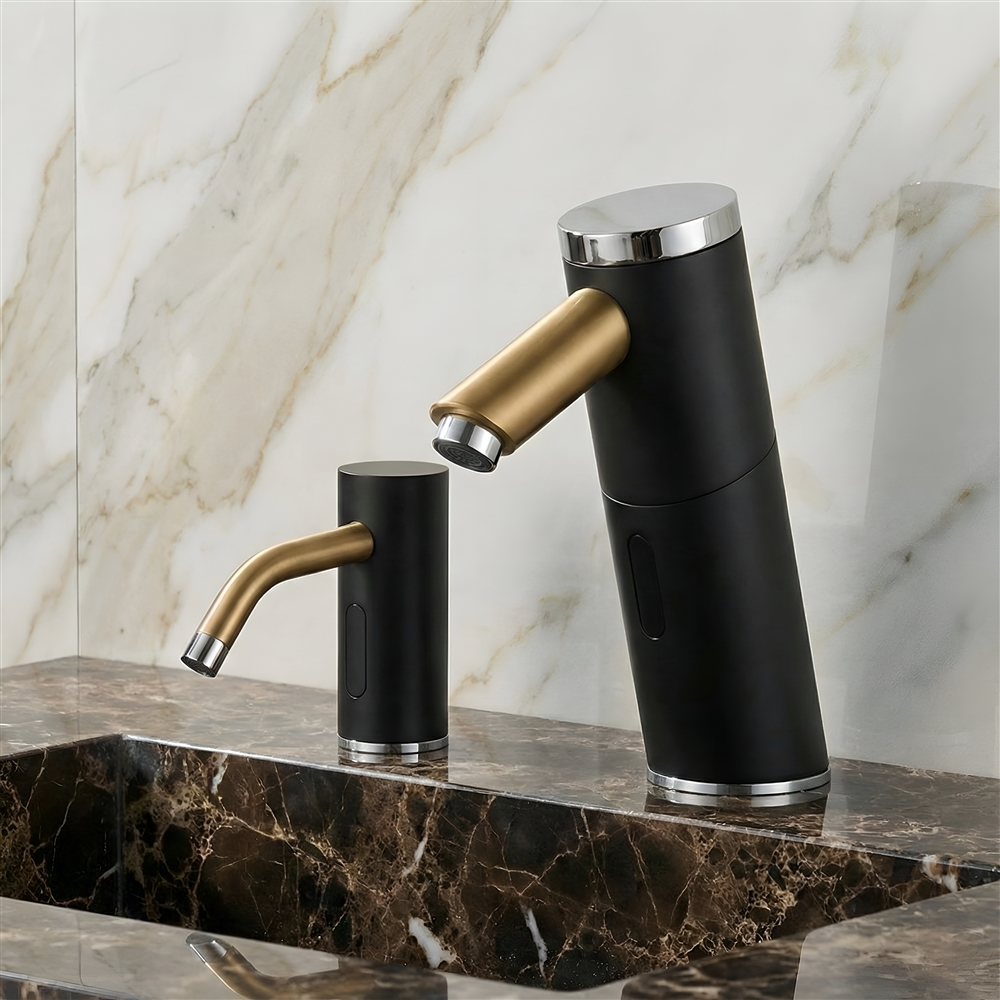
Fontana touchless faucets are specified in airport environments because they are positioned as infrastructure-grade fixtures rather than consumer restroom products. Their value is tied to consistent activation, controlled shutoff behavior, power strategies suited to large portfolios, and a maintenance model intended to reduce service interventions across terminals, lounges, and staff facilities.