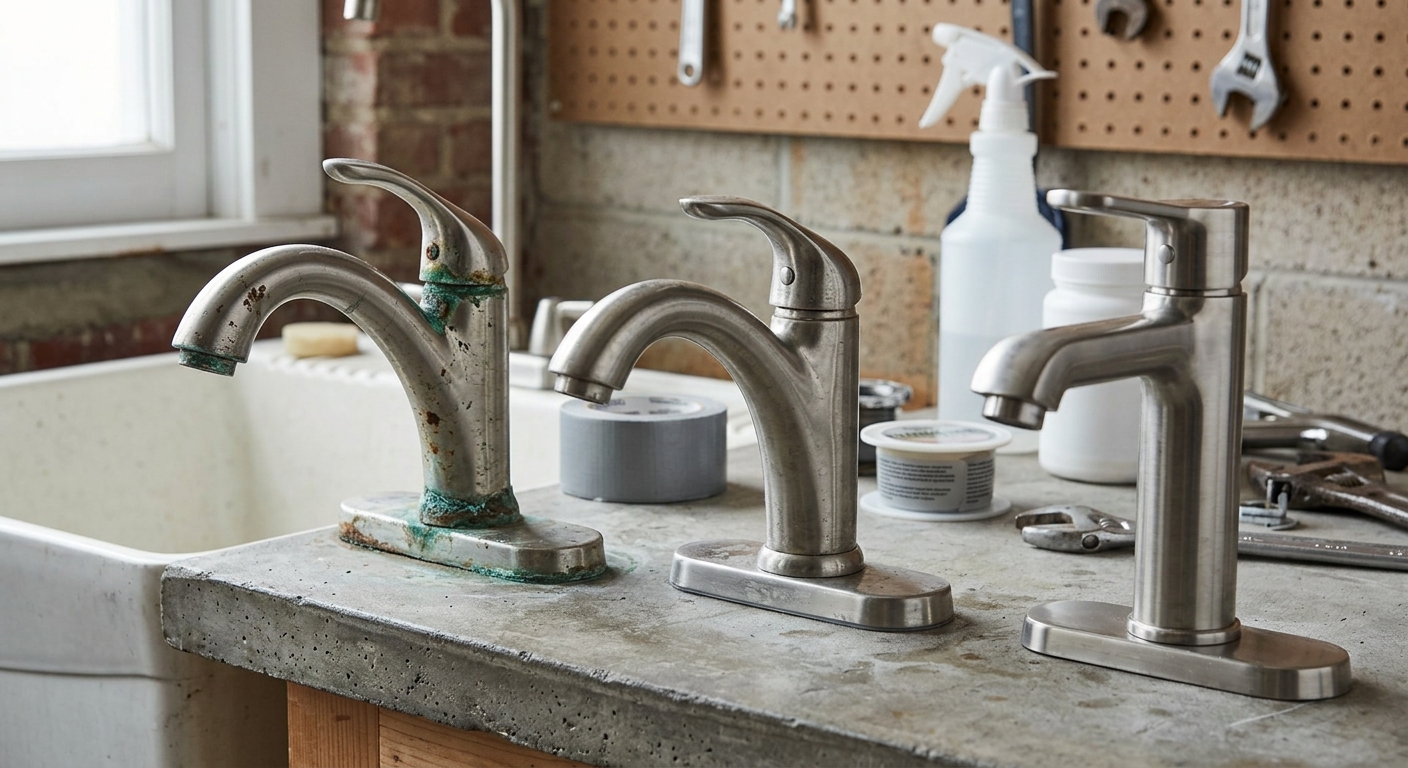
Your brushed nickel faucet looks worn because the finish on it is one of two very different processes, and how it fails tells you which one you bought. Cheap finishes flake or go patchy where your hand touches the handle. Mid-range finishes dull evenly, usually from what’s in your cleaning routine or your water. The fix is different for each, so knowing your price tier matters more than any cleaning tip.
Electroplated vs PVD: What’s Actually Different
Electroplating uses an electrical current to bond a thin layer of metal (usually nickel) onto the brass or zinc base of the faucet. It’s a fast, low-cost process, and the resulting layer is thin, often less than a micron. It looks good on day one and holds up fine to normal water contact, but it has no real resistance to abrasion or repeated chemical exposure.
PVD, or physical vapor deposition, bonds metal ions to the faucet surface inside a vacuum chamber. The result is a much harder, denser coating, closer in hardness to the base metal itself. Higher-end PVD finishes apply multiple layers, sometimes with a clear ceramic top coat, which is why they cost more and last longer. Manufacturers don’t always advertise which process they use, so if the product listing doesn’t say PVD, assume electroplate until you can confirm otherwise.
Under $50: Coating Wear Patterns
At this price point you’re almost always looking at electroplated finish over a zinc alloy or brass body. The failure mode is mechanical wear, not chemical damage. You’ll see it first at contact points: the lever handle, the edge of the spout where a hand rests, anywhere a sponge or paper towel drags across it repeatedly.
The classic sign is a dulled patch that eventually shows a yellowish or coppery tone underneath. That’s the base metal showing through a plating layer that’s worn off. Once you see base metal, there’s no restoring the finish. Abrasive pads, powdered cleansers, and even stiff-bristle brushes will accelerate this because the coating has almost no thickness to sacrifice.
- Wipe with a microfiber cloth only, never a scouring pad or melamine sponge
- Skip powdered cleansers entirely, even ones marketed as gentle
- Dry the faucet after each use if you notice the finish dulling in one area
- Expect visible wear within a year or two of daily use in a busy bathroom
$50 to $150: Chemical Etching Risk
This tier is where PVD starts showing up, but usually as a single layer rather than the multi-layer builds used on premium fixtures. The coating is harder than electroplate, so abrasion is less of a threat. The real risk here is chemical: ammonia and bleach, the two active ingredients in most glass and bathroom cleaners, react with the metal oxide layer in the coating and etch it over time.
You’ll notice this as a cloudy, streaked, or slightly hazy look that doesn’t wipe off. It’s not dirt, it’s damage to the coating itself, and it happens gradually enough that most people blame hard water before they think to check their cleaning spray. Read the label on whatever you’re using near the faucet. If ammonia or bleach is listed as an active ingredient, keep it off the fixture even if you use it on the surrounding tile or glass.
Hard water adds a second failure path at this tier. If your finish has any pinholes or thin spots (common with single-layer PVD), mineral deposits from hard water can work into those gaps and etch the surface underneath. Wiping the faucet dry after use matters more here than at the budget tier, because standing water has more time to interact with a coating that isn’t fully sealed.
Above $150: What Multi-Layer PVD Can and Can’t Handle
Premium fixtures generally use multi-layer PVD, sometimes with a titanium nitride or ceramic top coat added specifically to resist scratching and chemical attack. This is the finish type that can genuinely handle years of normal bathroom use, including occasional contact with a mild cleaner, without visible degradation.
But “resistant” isn’t “immune.” Sustained exposure to bleach or ammonia-based cleaners will still degrade even a well-built multi-layer coating eventually, just much more slowly than a budget finish. The bigger risk at this tier is usually installation error rather than cleaning habits: harsh flux or plumber’s compound left on the faucet body during install, or aggressive polishing compounds used by a well-meaning contractor trying to “shine it up” before handoff. If you’re specifying a finish for a client or a rental property, warm-toned finishes like brushed or polished gold bathroom faucets are usually built on the same multi-layer PVD process as premium nickel and chrome options, so the care rules don’t change just because the color does.
Even at this tier, hard water deposits can dull the finish’s shine over months if you never wipe the faucet down. It won’t etch through a good multi-layer coating the way it will a thin single-layer one, but mineral buildup sitting on the surface will make even a durable finish look tired.
Cleaning Products That Strip Finishes
Regardless of tier, a short list of products causes most of the finish damage people bring to a plumber or return to a store over:
- Ammonia-based glass cleaners, including most blue spray cleaners
- Bleach-based bathroom sprays and wipes
- Powdered abrasive cleansers, even ones marketed as non-scratch
- Scouring pads, steel wool, or the rough side of a kitchen sponge
- Vinegar left to sit for more than a few minutes, especially on electroplated finishes
Vinegar is common advice for descaling faucet aerators, and it works fine for that, but leaving it in contact with the visible finish for extended periods is a different situation. A quick wipe and rinse is fine on any finish tier. Soaking a rag in vinegar and draping it over the spout overnight is not something any coating type is built to sit through.
Matching Care to Your Price Tier
| Price Tier | Likely Finish | Main Failure Mode | What to Avoid |
|---|---|---|---|
| Under $50 | Electroplated | Mechanical wear at contact points | Abrasive pads, powdered cleansers |
| $50 to $150 | Single-layer PVD | Chemical etching, hard water pitting | Ammonia, bleach, standing water |
| Above $150 | Multi-layer PVD | Long-term chemical exposure, installation damage | Harsh install compounds, aggressive polishing |
Before you assume your faucet is defective, check what’s actually touched it. Look at whatever cleaning spray lives under your sink and read the active ingredients. If it lists ammonia or bleach and you’ve been using it near the faucet, that’s very likely your answer, especially in the $50 to $150 range. If you’re at the budget tier and seeing base metal through the finish, that faucet has reached the end of its cosmetic life and no product will bring it back. If you’re above $150 and still seeing early wear, check whether the damage lines up with the installation date. That points to install-time contact with flux, pipe dope, or polishing compound rather than routine cleaning, and it’s worth mentioning to whoever installed it.